SEO Integrity • Agency Operations
How SEO Agencies Can Detect Cloaking Before Rankings Collapse
Most agencies discover cloaking too late. Rankings are already down, clients are asking what happened, and your team has to investigate under pressure. The problem is not that teams do not care. The problem is that manual checks are not built to catch bot-vs-user mismatches quickly.
This guide gives you a practical workflow to detect cloaking before visible SEO damage: how to prioritize risk across client portfolios, what to scan first, what to track weekly, and how to report findings in a client-safe format.
1. Why agencies miss cloaking signals
Cloaking rarely appears as a dramatic single event. More often, it starts as subtle divergence: Googlebot receives spam links or altered redirects while normal visitors still see clean pages. Teams that only verify pages in a browser will miss this gap by design.
Agency operations make this worse: many domains, different CMS stacks, and limited time per account. A monthly manual audit may catch known technical SEO issues, but not transient cloaking behavior triggered by user agent, IP, or request headers.
2. Build a risk-tiered scan list first
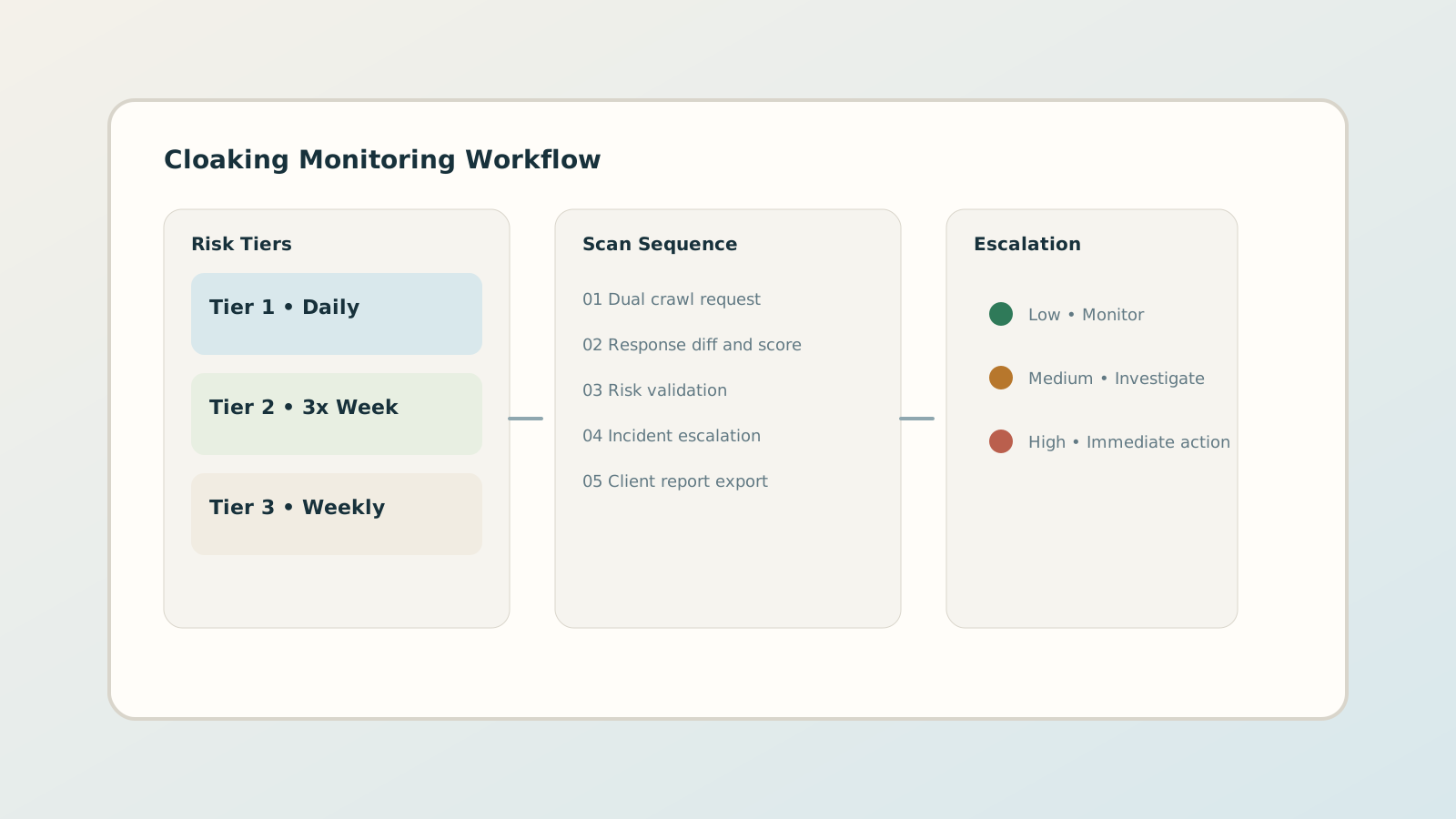
Start by splitting client URLs into three tiers. This avoids wasting scan budget and gives your team clear priorities when an alert arrives.
- 1 Tier 1 (daily): money pages, lead pages, top landing pages, and strategic content clusters.
- 2 Tier 2 (2-3x week): supporting service pages, category hubs, and localized pages with ranking history.
- 3 Tier 3 (weekly): low-traffic archive pages and long-tail posts with limited business impact.
This model gives you fast detection where revenue risk is highest and still keeps baseline coverage across the full site.
3. Run a weekly 4-step cloaking check
Use the same sequence every week so your team can execute quickly, compare outcomes over time, and reduce false positives.
- 01 Dual fetch: request each URL as Googlebot and as a normal browser in parallel.
- 02 Compare output: diff HTML, redirect chains, canonical tags, and outbound links.
- 03 Score severity: classify as low, medium, high based on index impact and page value.
- 04 Escalate immediately: open a client incident only when mismatch is validated with evidence.
4. Track the right KPIs for clients
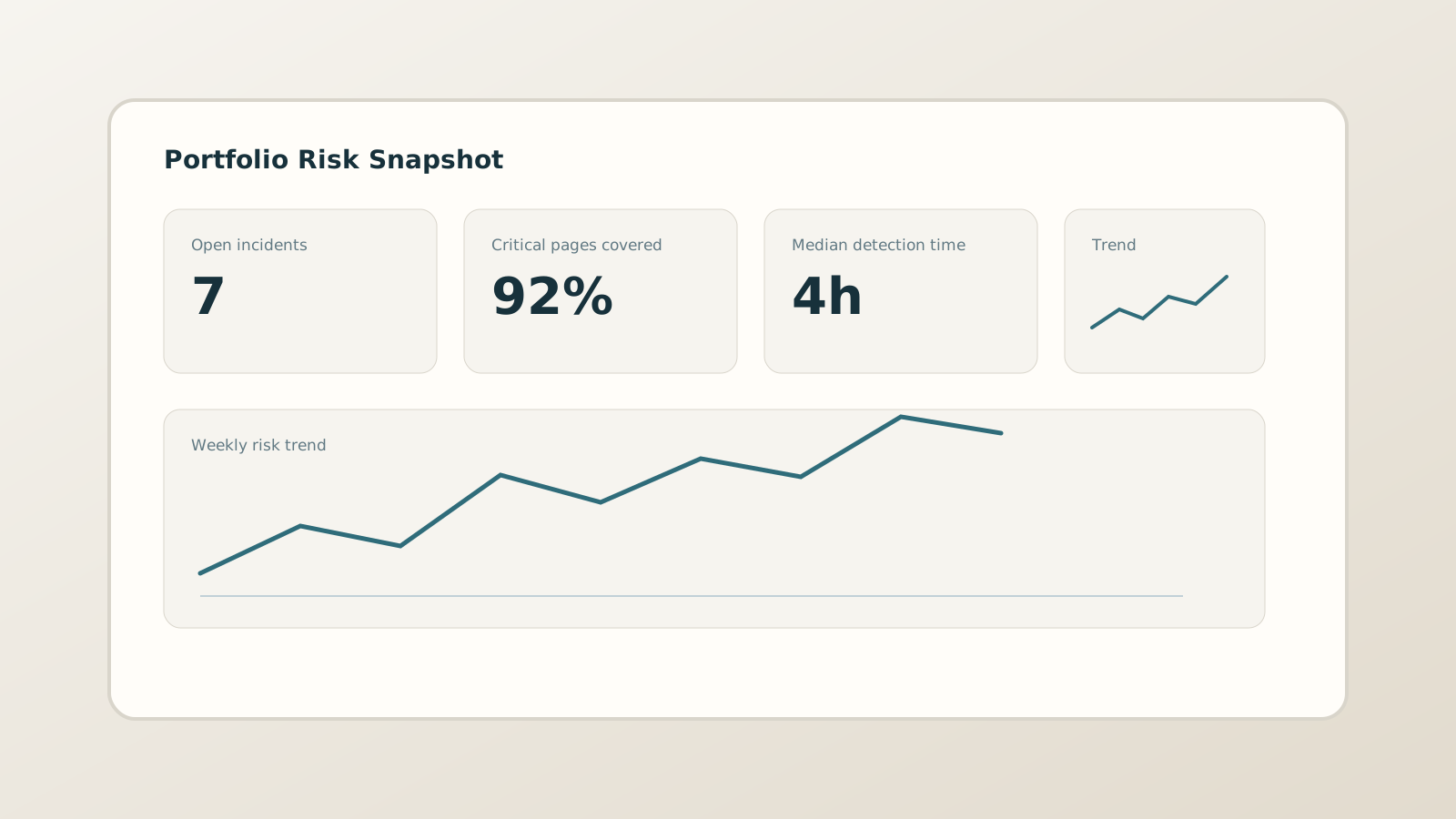
Most reports fail because they only show technical findings. Clients need risk context tied to outcomes. Keep your cloaking dashboard focused on decision metrics.
- Pages with crawler/browser mismatch (weekly trend)
- Median time-to-detection after change
- Critical pages covered by daily scans
- Validated incidents resolved within SLA
5. Convert findings into client trust
Cloaking monitoring is not only a technical defense. It becomes a commercial differentiator when your agency can show proactive detection before ranking loss. The strongest client message is simple: we did not wait for traffic damage; we identified divergence early and acted with evidence.
This is exactly where a dedicated workflow matters: clear scan cadence, clear incident threshold, clear remediation handoff, and clear report trail.