SEO Integrity • Subdomain Security
Subdomain SEO Spam: How Forgotten Subdomains Poison Your Main Domain's Rankings
Most SEO incident guides focus on the root domain: the homepage, the WordPress install everyone still uses, the pages in your sitemap. That makes sense until you realize the compromise is not there. It is on staging.clientbrand.com, an old blog host nobody has touched in three years, or a CDN origin that still serves a PHP backdoor to Googlebot while returning a blank page to normal visitors.
Subdomain SEO spam is one of the most under-audited attack surfaces on the web. Agencies run clean audits on the main site, clients see normal analytics, and Search Console for the primary property looks stable. Yet Google may be indexing hundreds of pharma, casino, or loan pages under hosts the business forgot existed. This guide explains how those attacks work, why they are easy to miss, and how to audit every subdomain under your brand before rankings absorb the damage.
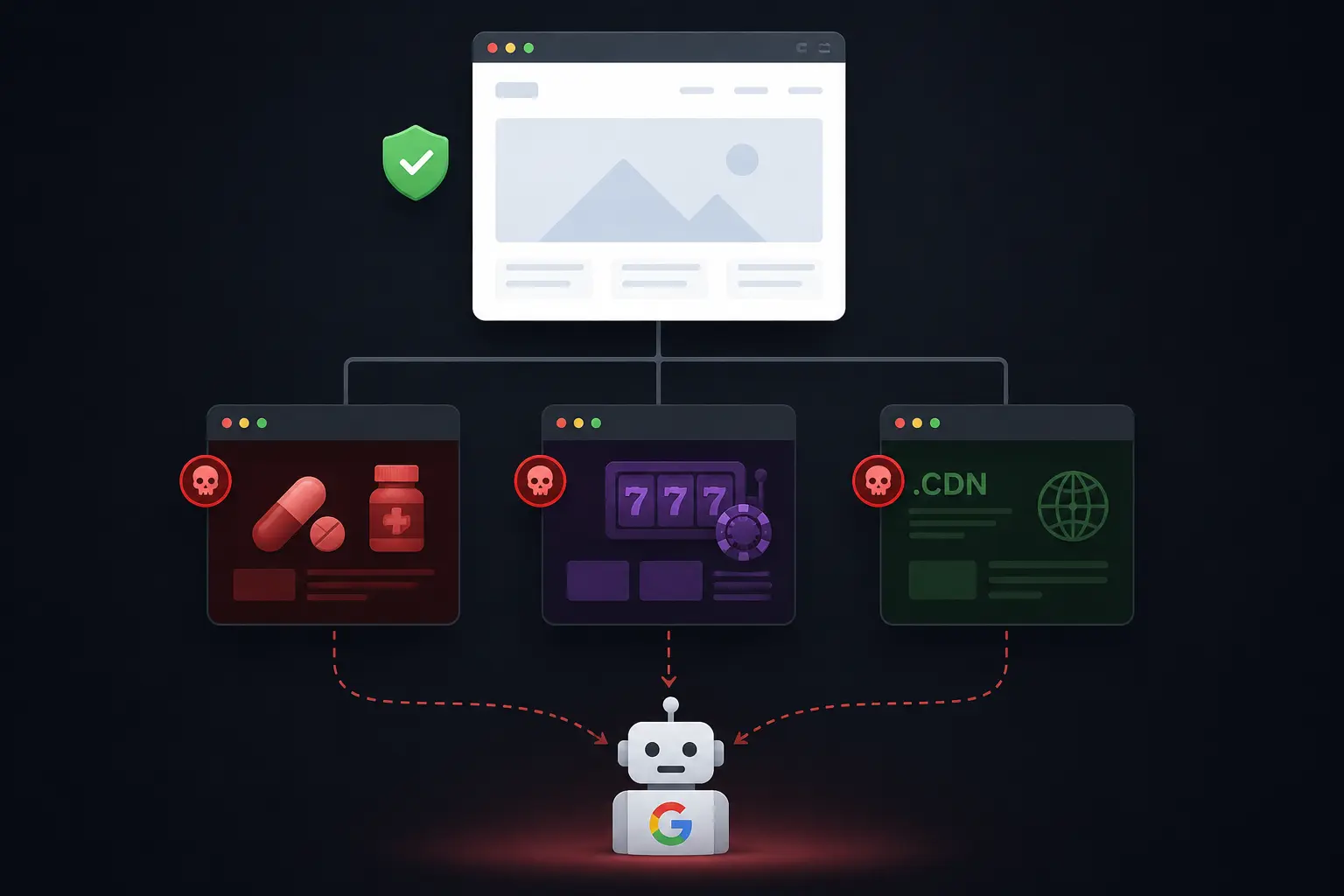
1. Why subdomain spam is different from a root-domain hack
A root-domain compromise is loud. Rankings move, branded queries pick up unrelated terms, and someone on the team usually notices. Subdomain spam is quieter because it exploits organizational blind spots, not just software vulnerabilities.
The pattern looks like this: a host was created for a launch, a migration, a campaign microsite, or a vendor integration. The project ended. DNS stayed live. The CMS was never patched again. Credentials rotted. Backups stopped. But Google kept crawling the hostname because it was once linked, submitted, or discovered through internal links and sitemap history.
Attackers love these hosts because they inherit domain trust without
inheriting operational attention. A spam page on
staging.example.com can index faster than a page on a brand-new domain and stay invisible
to teams who only monitor production.
2. The five subdomain types teams forget to audit
Not every subdomain is equally risky, but these five categories appear repeatedly in real incidents:
- 1 Staging and dev hosts: often indexed because robots.txt was disabled, basic auth failed, or a firewall rule whitelisted Googlebot during testing.
- 2 Legacy blogs and microsites: separate WordPress installs with old plugins, weak admin passwords, and no owner after a rebrand.
- 3 CDN and asset origins: misconfigured buckets or origin paths that expose directory listings, stale PHP files, or upload folders.
- 4 Abandoned SaaS CNAMEs: helpdesk, status page, or marketing tools left pointed at vendors after cancellation, sometimes vulnerable to takeover.
- 5 Wildcard DNS entries: any
random hostname resolves, giving attackers room to publish spam under
anything.example.comif they gain DNS or hosting access.
The common thread is operational decay. The software stack is old, the owner is gone, and the hostname still resolves. That is enough for a profitable SEO spam campaign.
3. How subdomain spam damages the main brand
Google evaluates hosts in context. A subdomain is not fully interchangeable with the root domain, but it is also not isolated. Large-scale spam on related hosts can still hurt the business in several ways:
- Crawl budget waste: Googlebot spends time on garbage URLs instead of money pages on the main site.
- Topic association drift: branded queries start showing impressions for pharma, casino, or loan terms tied to the wider domain footprint.
- Manual action risk: cloaking or deceptive behavior on any major host can trigger site-wide enforcement.
- Client trust damage: agencies look negligent if a forgotten staging host undermines a clean production audit.
This is why subdomain incidents feel unfair. The production site the client sees every day is fine. The SEO damage accumulates on hosts nobody remembers to include in the monthly checklist.
4. A practical subdomain audit workflow
Treat subdomain discovery as a separate phase from root-domain malware cleanup. You need an inventory before you can scan intelligently.
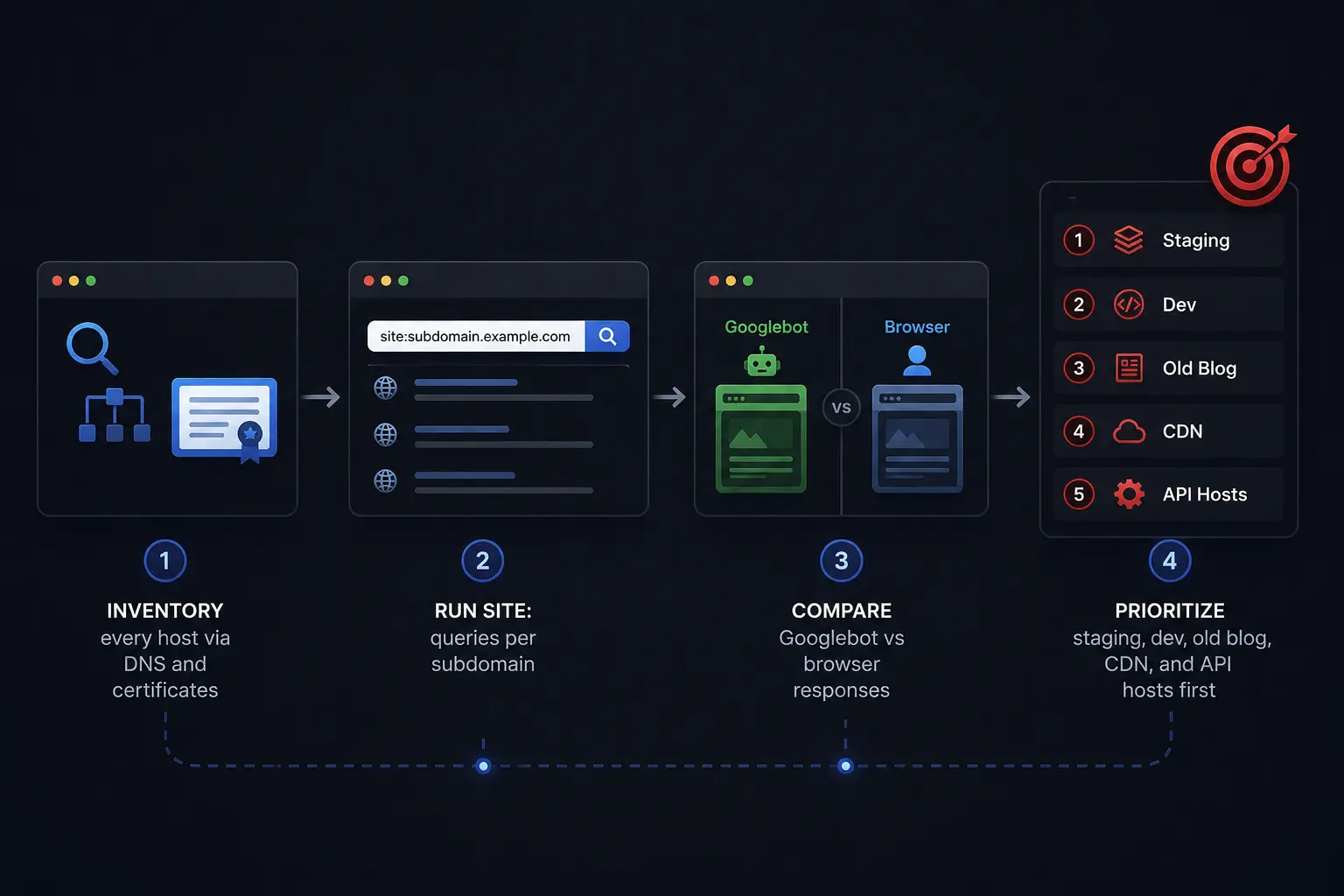
Step A — Build the host inventory
Pull DNS records from your registrar or DNS provider, review certificate transparency logs, and ask the client for a list of every hostname that has ever been public. Include retired campaign domains that still CNAME into the primary zone.
Step B — Run search operators per host
Do not rely on a single root-domain query. Run targeted checks like:
site:staging.example.com

site:blog.example.com

site:cdn.example.com viagra

site:*.example.com casino
A clean root domain plus a polluted staging host is still an active incident. Capture screenshots and export the result URLs before anything is taken offline.
Step C — Validate crawler vs browser behavior
Subdomain spam often uses the same cloaking tricks as root-domain attacks. A host may return a login page or redirect to marketing in a browser while serving thousands of keyword pages to Googlebot. URL Inspection alone is not enough if the malicious response is user-agent conditional.
Compare the HTML, redirect chain, canonical tag, and outbound links for each suspicious host in both contexts. That is the fastest way to separate a dead staging server from an active SEO parasite.
5. Containment without breaking production
The instinct is to delete DNS records immediately. Sometimes that is correct. Often it is better to sequence the response:
- 01 Preserve evidence: export indexed URLs, HTML samples, headers, and Search Console data.
- 02 Stop indexing first: use noindex, auth walls, or temporary 410 responses on the compromised host while you locate the entry point.
- 03 Remove the attack path: patch or decommission the abandoned app, rotate credentials, and review wildcard DNS.
- 04 Decommission safely: only delete DNS after you confirm no production service, email, or certificate dependency still relies on the host.
Agencies managing multiple clients should document which subdomains are intentionally public and which must never be indexed. That single inventory prevents the same host from being reintroduced during the next redesign.
6. Prevention: make forgotten hosts hard to create
Subdomain spam is as much a process problem as a security problem. Strong teams adopt a few simple rules:
- Every non-production host gets a named owner and a sunset date.
- Staging and dev environments block all crawlers by default.
- Search Console uses domain-level properties where possible, not only URL-prefix views of production.
- DNS changes require a note explaining whether the host should be indexable.
None of this replaces monitoring. It reduces the number of silent hosts that monitoring has to catch later under pressure.
7. Why one-time audits fail on subdomain sprawl
A quarterly spreadsheet review cannot keep pace with how agencies and SaaS stacks create new hostnames. A client launches a webinar landing page on a subdomain in March, forgets it in April, and discovers casino spam indexed there in August. The root-domain audit from May looked perfect.
Continuous monitoring matters because it checks what Google sees on a schedule — including high-risk hosts outside the main sitemap. For portfolios with multiple clients, that is the difference between catching subdomain cloaking early and explaining a ranking collapse after the fact.