1
Dual crawl
Visitor versus Googlebot on the same URL. HTML, redirects, status, and rendered screenshots.
Case study
Visitors got the real site. Google got casino and pharmacy pages. A file scanner stayed green. The dual crawl showed both faces on the same URL.
Anonymized incident · One of 17 cloaking attacks found across 450+ scans
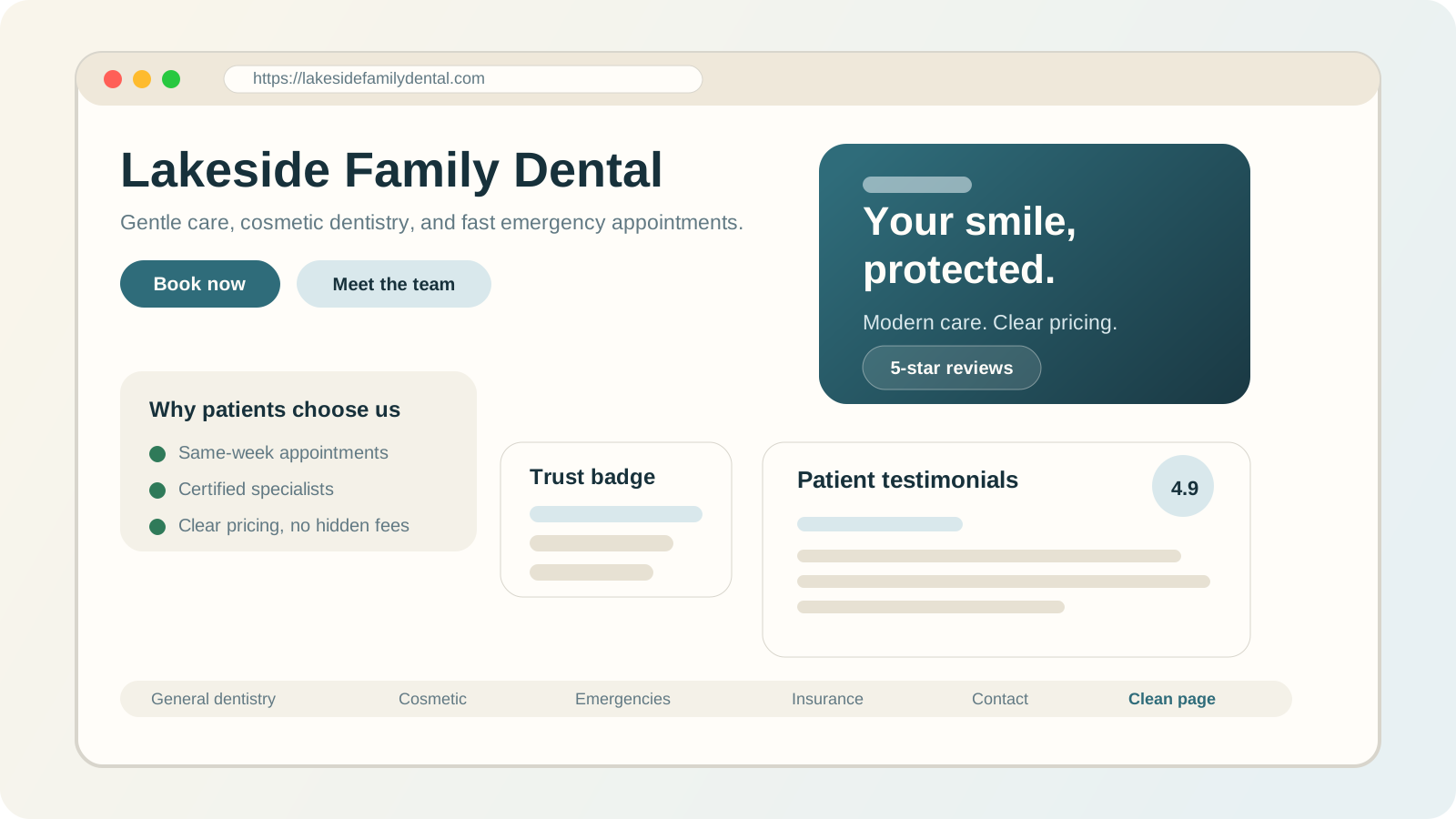
Visitor
The homepage the owner and the client both saw in a normal browser.
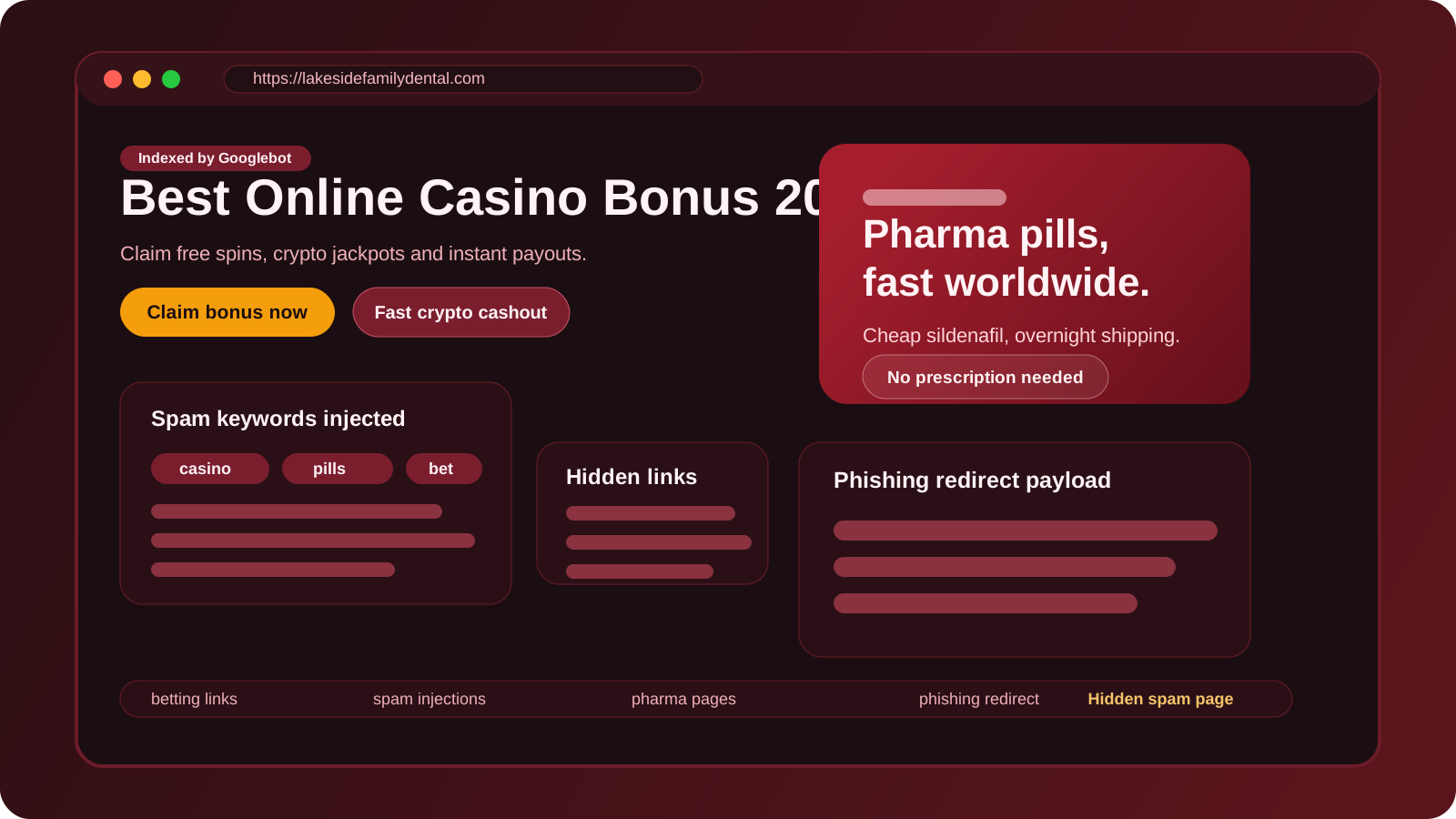
Googlebot
Casino and pharma pages on the same URL, served only when the request looked like a crawler.
Client identifying details removed. The split above is the visitor-versus-crawler pattern CloakScan records on this kind of incident — the same dual view as the product demo.
What happened
The site was WordPress. In a normal browser it looked like a local business. No spam in the nav, no casino pop-up, nothing a client would screenshot and send in a panic.
Googlebot received a different document. Titles, links, and
money-pages pointed at pharmacy and gambling content. That is why
a plugin that reads
wp-content
can stay green: the second page is often a rule, not a file.
CloakScan compared a real browser session with a Googlebot identity on the same URL, kept both renders, and flagged the mismatch. An index check then showed the leftover: spam URLs already sitting under the domain.
What the report answers
1
Visitor versus Googlebot on the same URL. HTML, redirects, status, and rendered screenshots.
2
Public REST API for injected posts and pages a homepage crawl will miss.
3
Pharma, casino, adult, and crypto URLs already ranking under the domain after a “cleanup.”
Longer technical versions: the pharma hack and why a clean plugin scan can sit next to indexed spam.
See both faces
Paste a URL, or start a trial. 450+ scans run. 17 cloaking attacks found. No plugin.